Freezing of eight cross-passages of the Rijnlandroute Tunnel in Leiden, Netherlands
Client
ARGE COMOL 5
Organization
ARGE JV Freezing Comol 5 consisting of the companies REDPATH DEILMANN and DMI Injektionstechnik
Location
Leiden, Netherlands
Execution period
May 2020
until December 2021
Project description
An innovative road tunnel with two parallel tubes, each 2.5 km long, was built between the A44 and A4 highways in Leiden. The aim was to improve transport links, create economic impetus for the region and eliminate bottlenecks.
Technical implementation
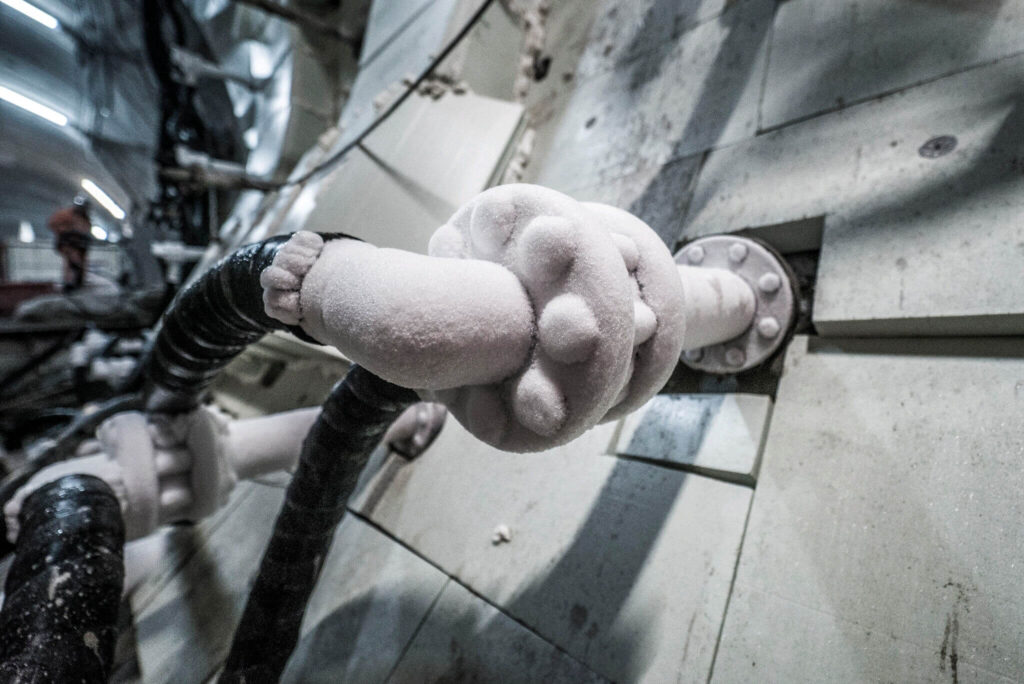
Ground freezing for the cross passages between the tunnel tubes was carried out using state-of-the-art freezing machines and innovative drilling technology. This method enables a watertight construction by cooling the sandy soil to as low as -25 °C. A stable body of frost forms within 40 days, allowing construction to proceed without water ingress.
"Cold takes time."
Once the freezers have been tested and fully commissioned, it takes at least 40 days for a solid body of frost to form, depending on the crosscut.
Maintenance and technology
The freezing machines previously used in Egypt were thoroughly overhauled before being used in the Rijnlandroute project. This shows how important careful maintenance and adaptation of machines is for their long-term use and the specific requirements of new projects.
Innovative design
As part of this project, the drilling was carried out from the first tunnel, even though the second tunnel had not yet been completed. The challenge was to complete the drilling precisely and accurately.
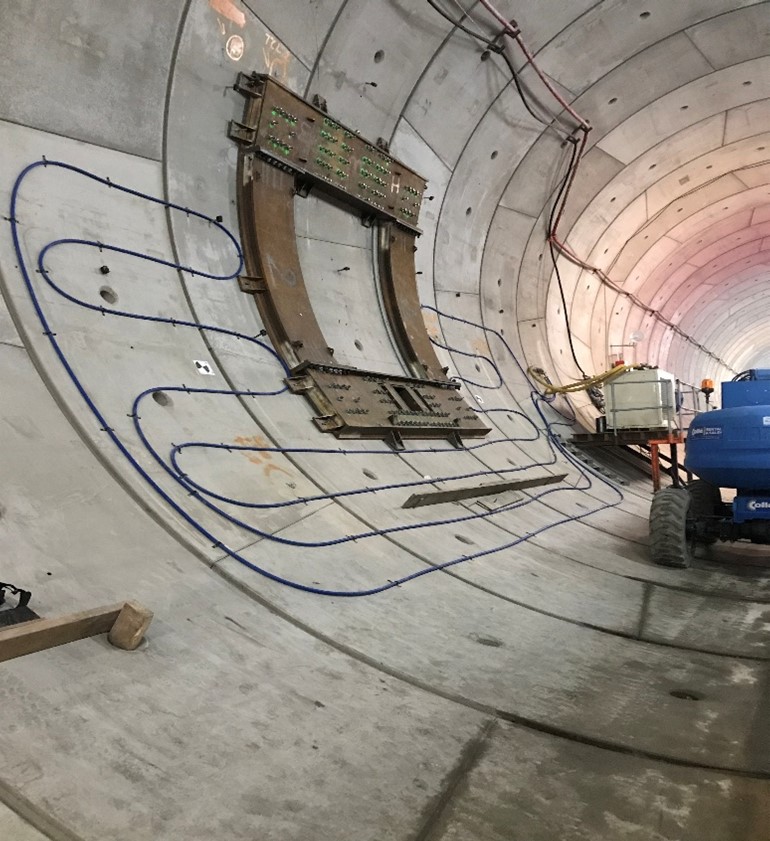
In addition, surface cooling was installed to guarantee a complete frost body as a seal at the target tunnel. This method could significantly speed up future tunnel construction projects.
Construction phase
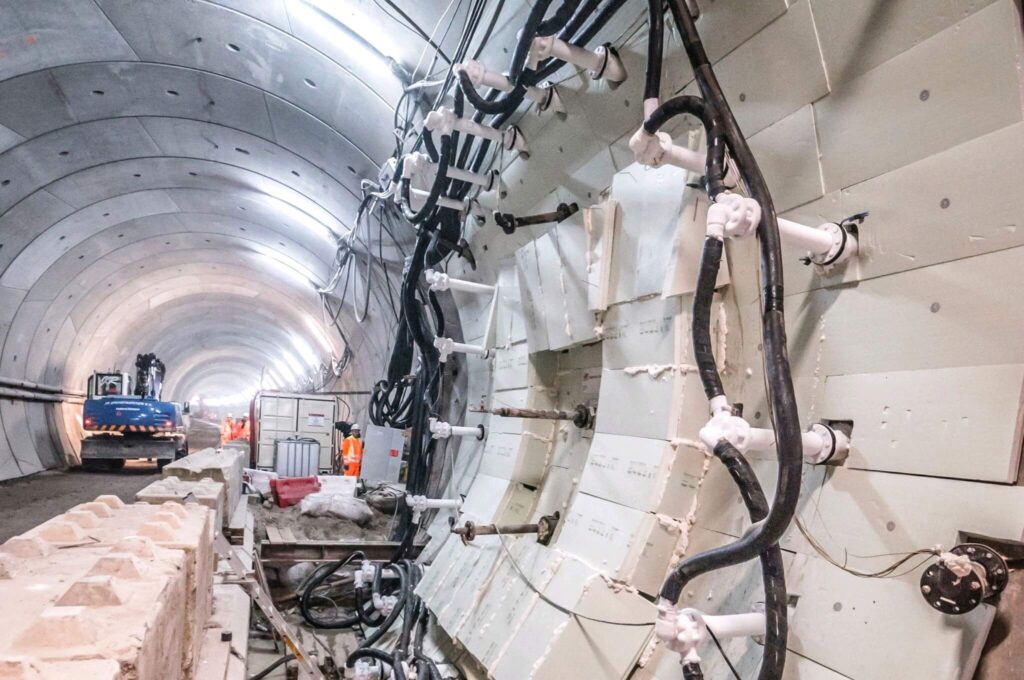
In the freezing of cross-cuts, freezing pipes are inserted into the ground. A coolant with a temperature of -35 °C circulates through these pipes to cool the surrounding rock or soil to a low temperature. This causes the soil and water in the ground to freeze, creating a stable wall of ice. This ice barrier acts as a temporary support, preventing the ground from collapsing or water from entering the tunnel or crosscut. It thus creates a safe working environment for the construction workers and allows tunnel work to continue.
Freezing Comol 5
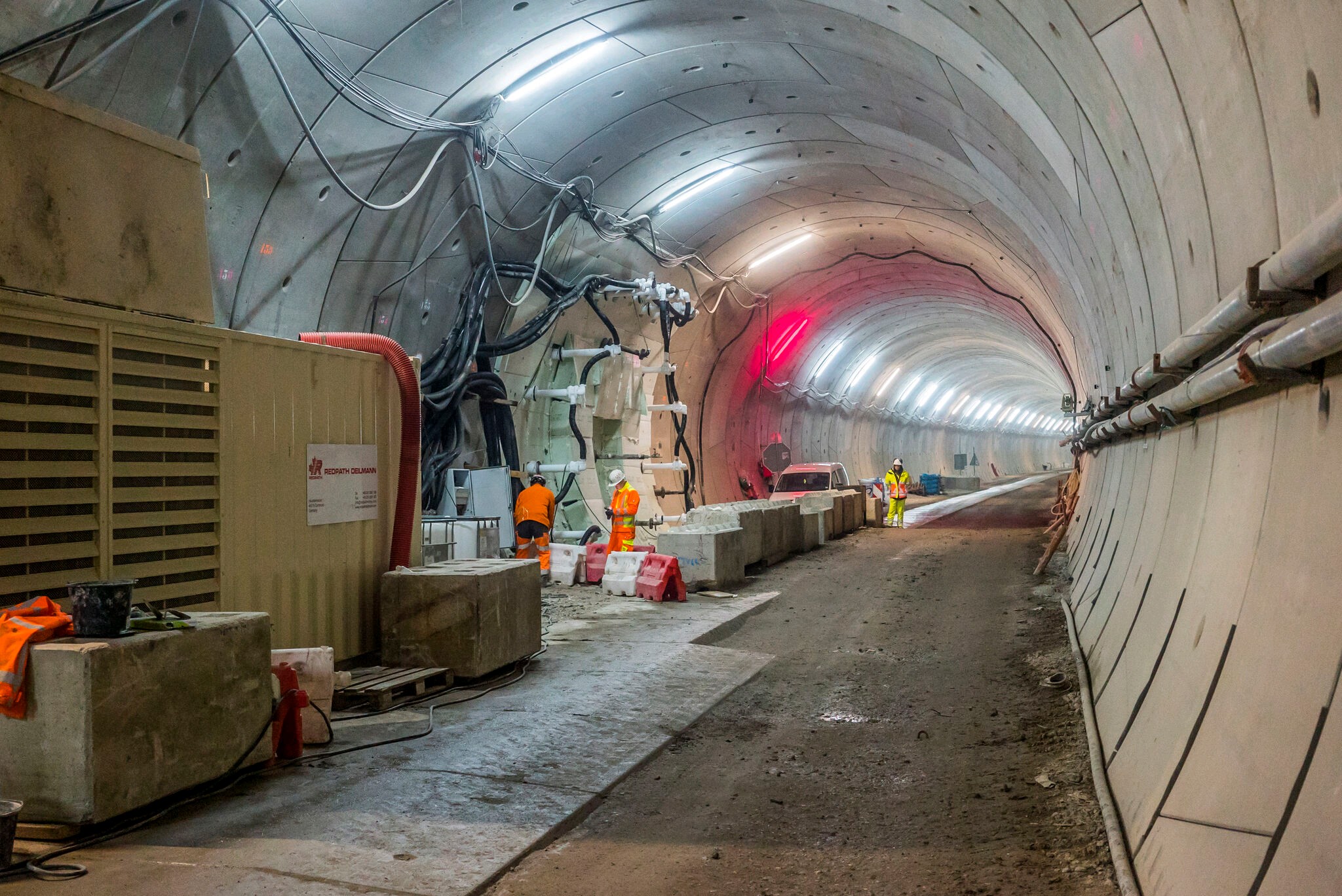
Preparation of the freezing work in the Rijnlandroute tunnel
Freezing work in the Rijnlandroute tunnel
Project details
Scope of work
Boreholes for freezing, drainage and temperature measuring pipes (28-33 per crosscut)
Installation of eight freezing machines, one per crosscut, including measurement technology
Installation of a 10 kW refrigeration system for surface cooling
Installation of 16 temperature measurement systems for monitoring the temperature distribution in the soil
Installation of over 800 PT 100 temperature sensors for monitoring the temperature distribution in the floor
Insulation of the tunnel walls and freezing pipes
Technical support during the entire freezing process
Technical data at a glance
Holes with 101.6 mm diameter, 28 -36 holes per crosscut
Crosscuts with a length of 5-12 m
Freezers: 4 x L&R (100 kW), 5 x York (94 kW) cooling capacity with external air-cooled dry cooler
Tunnel length: 2 x 2,250 m, inner diameter approx. 10 m
Monitoring of icing measures by digital measuring system AMR WinControl
Special features
Installation of a 10 kW refrigeration system for surface cooling
Drilling work during ongoing backfilling in the first tunnel
Technical support and maintenance of eight simultaneously operating freezers requires a systematic approach and technical expertise