Rehabilitation of a section of the main hoisting shaft of the Zielitz potash plant using injection and shotcrete
Client
K+S
Organization
ARGE shaft Zielitz 1 refurbishment
Location
Zielitz near Magdeburg, Germany
Execution period
2018
until 2023
In July 2018, ARGE Sanierung shaft Zielitz 1 was awarded the contract by K+S Minerals and Argriculture GmbH, Zielitz plant, for the planning and execution of remediation work in the main production shaft Zielitz 1.
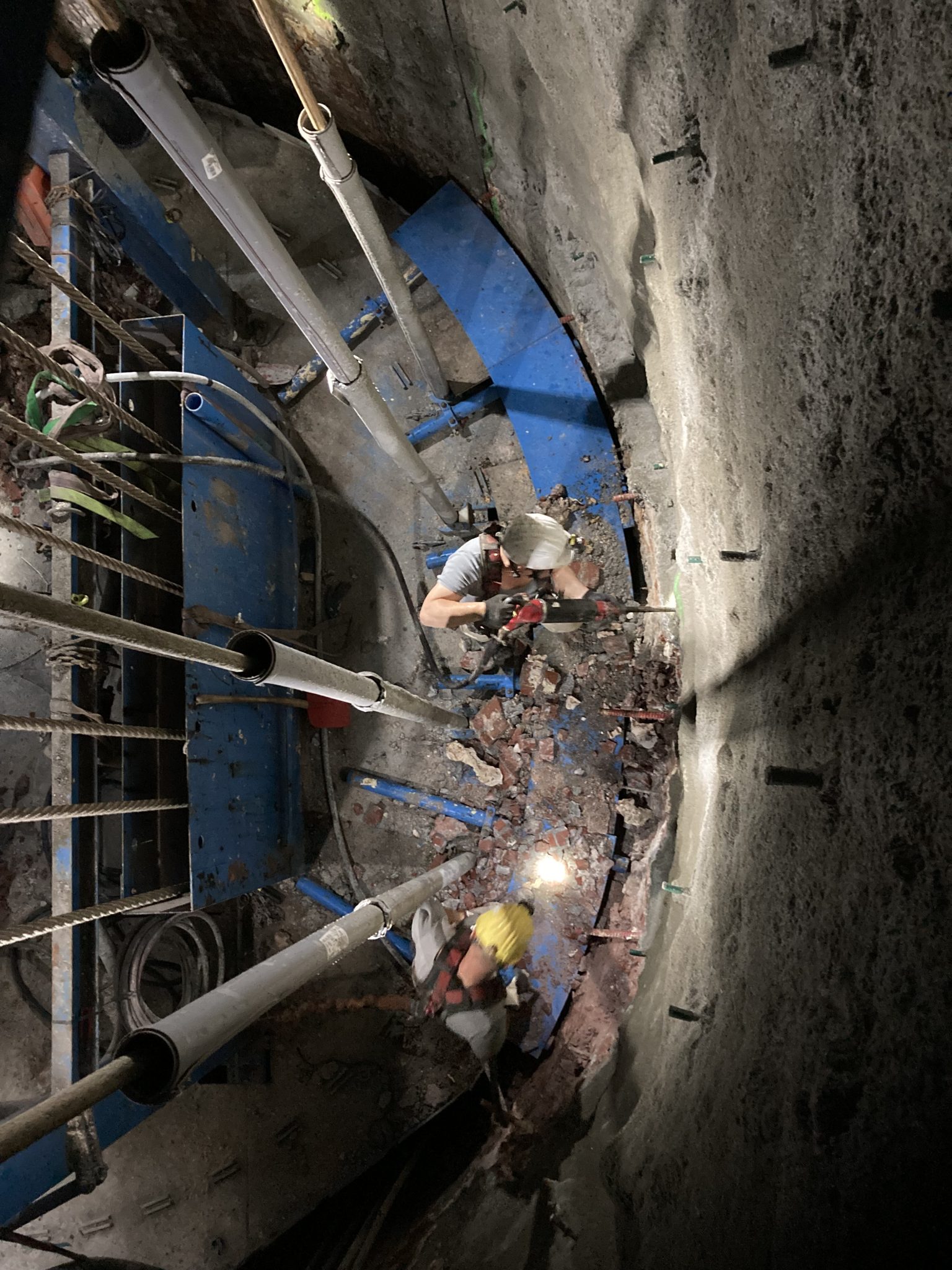
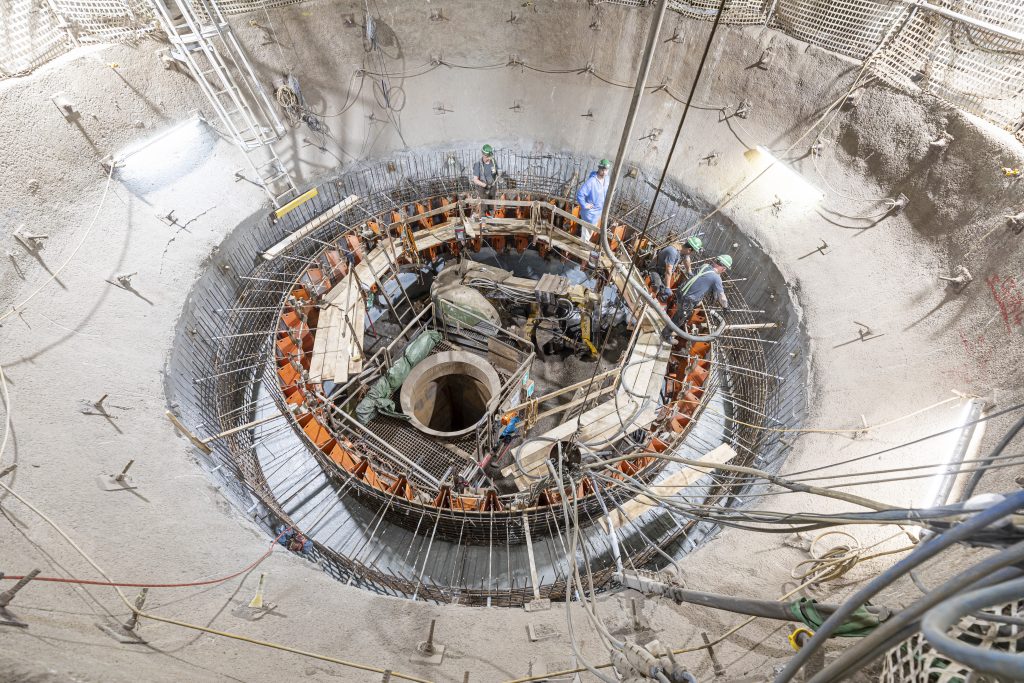
The renovation work was divided into two phases. The first phase comprised rock reinforcement by injecting 2-component resin in conjunction with a system anchorage. The second phase involved the renovation of the masonry by installing a reinforced shotcrete shell.
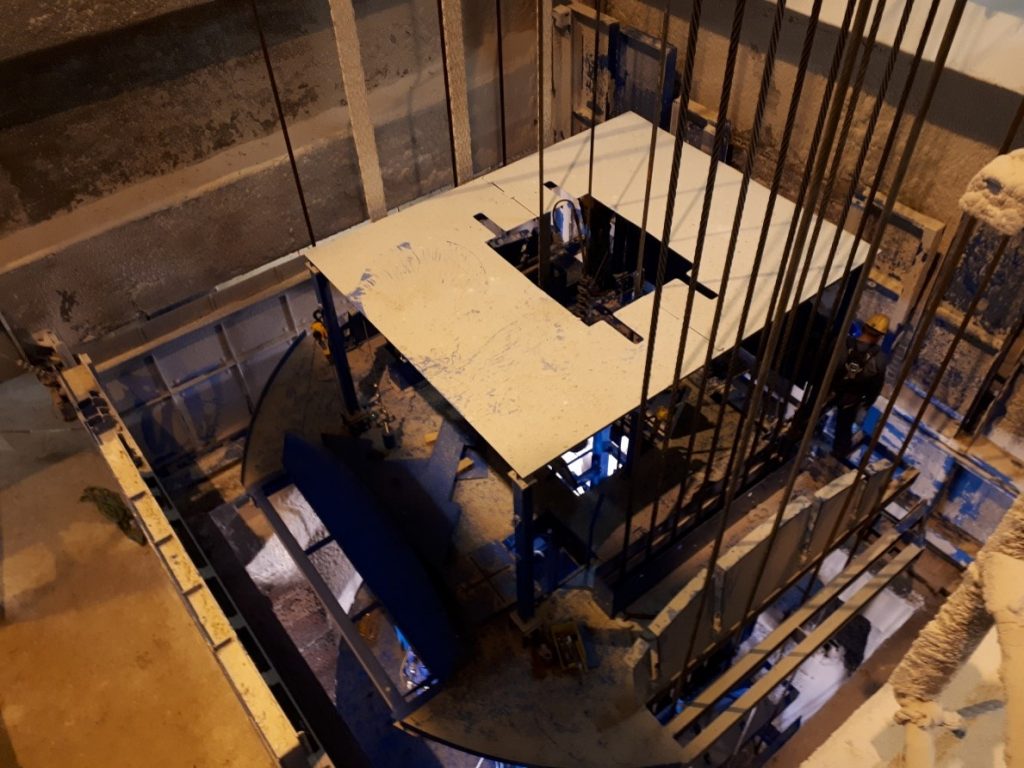
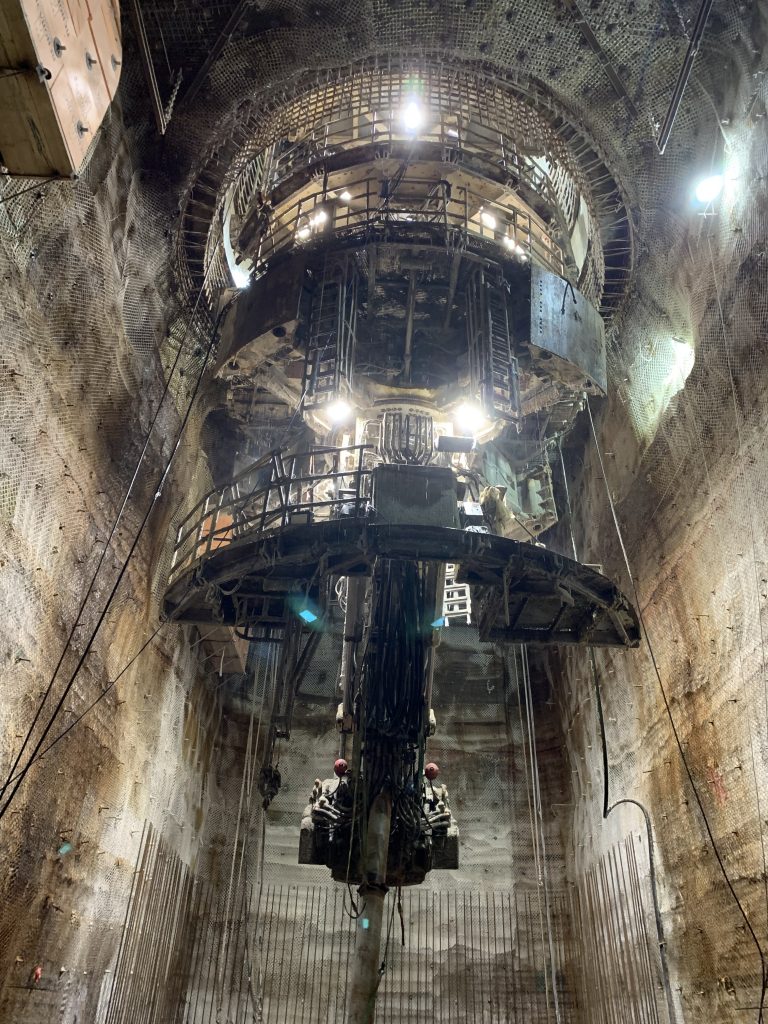
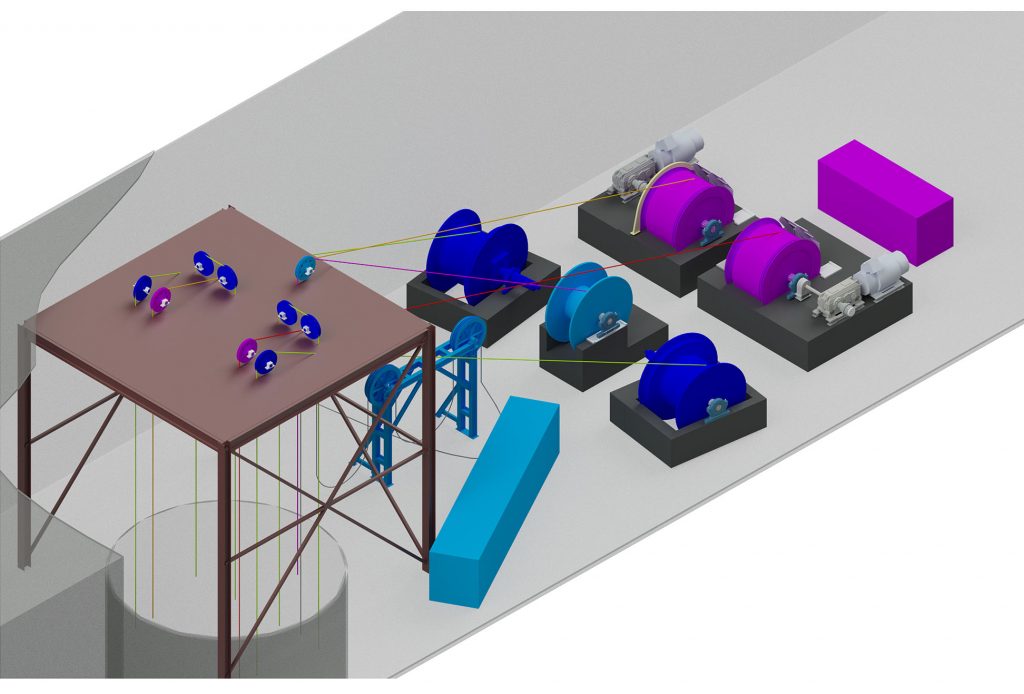
The renovation work was carried out with the help of a platform winch system including a two-storey working platform and a small ropeway provided by K+S. Due to a mining authority requirement, this had to be completed by 2023 at the latest.
Only the three-week breaks at the Zielitz plant were available for the work.
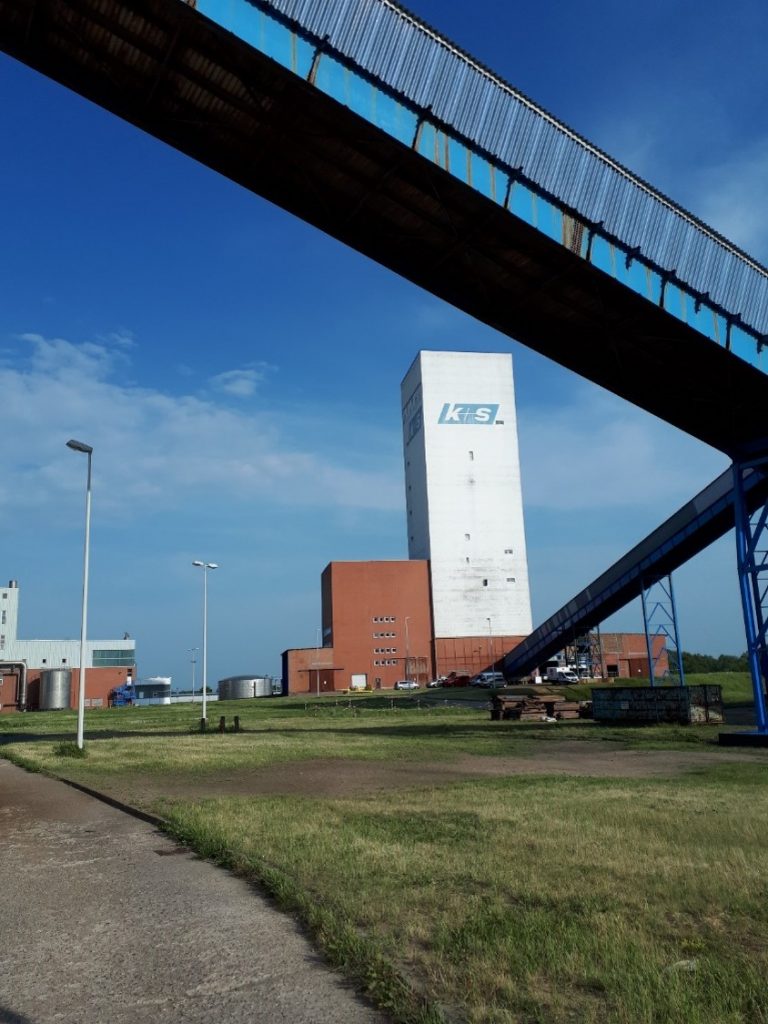
The Zielitz potash plant in Saxony-Anhalt is the largest single site of the company K+S Mineralsand Agriculture GmbH and extracts crude salts containing potassium for the production of fertilizers, products for industrial applications and products for the feed and food industry. In terms of annual output, it is one of the largest and most modern potash plants in the world.
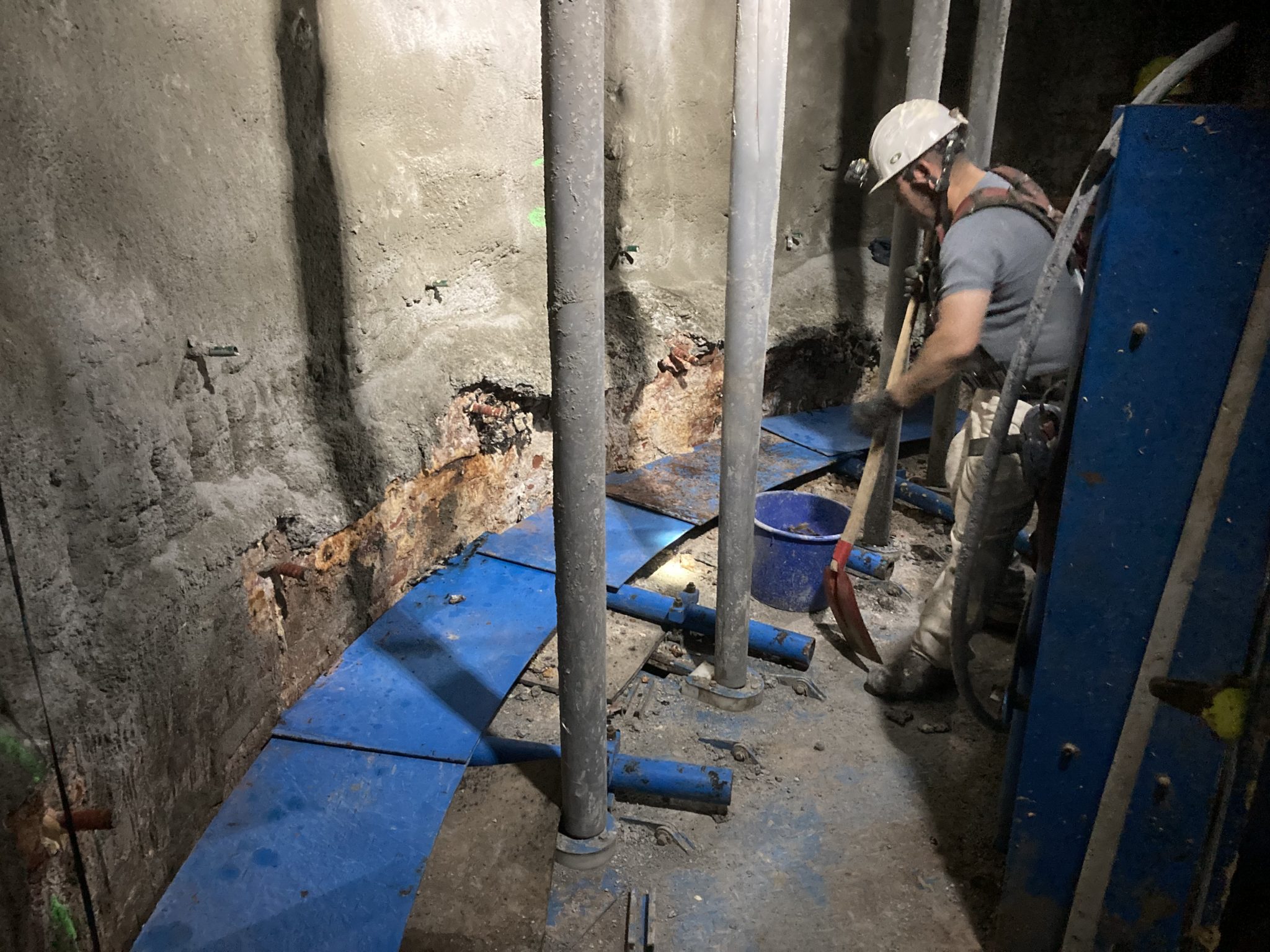
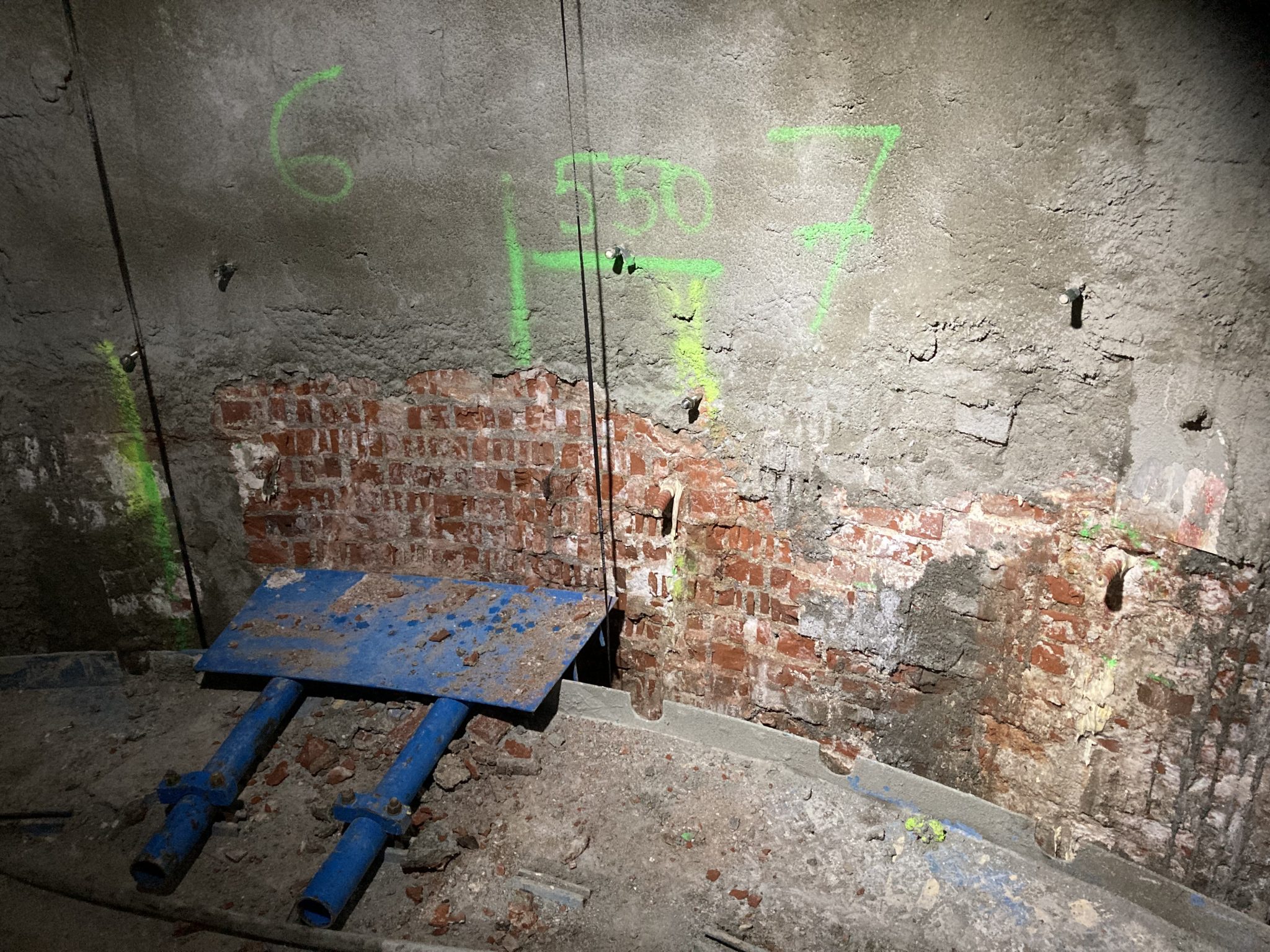
In the years 1967-1969, the Zielitz 1 shaft was sunk to a final depth of 806.3 meters. It is lined with cast-iron segments from the grass suspension bench to a depth of approx. 465 m. In this area, the shaft has a clear diameter of 7.5 m. Below the segmental lining, there is clinker brickwork made of perforated bricks up to a depth of around 603 m, which is on average 50 cm thick. The area with masonry lining is interrupted between approx. 500 m and 520 m by a steel-concrete composite lining with asphalt backfill. In the course of a major shaft inspection carried out in August 2015, damage was recorded within the masonry lining between 538 m and 565 m below ground. In the damaged area, some of the masonry had flaked off, loosened or converged into the shaft cross-section.
The renovation could only take place during the three-week summer shutdown of the mine, which meant that it had to be carried out under considerable time pressure.
2018: Drilling and injection work (phase 1)
2019: Drilling and injection work (phase 1)
2020: No work due to skip replacement by K+S
2021: Reinforcement work, installation of wet shotcrete (phase 2)
2022: Reinforcement work, installation of dry shotcrete (phase 2)
2023: Reinforcement work, installation of dry shotcrete (phase 2)
The renovation work was successfully completed in summer 2023.
Zielitz - Renovation work
Zielitz - Renovation work
Zielitz - Shaft lining masonry and shotcrete
Project details
Scope of order
Assembly and commissioning of a work platform and a bucket conveyor system
Remediation from 539 m to 564 m depth with injection anchors made of GRP, 5 m anchor length/m2
New inner shell made of shotcrete
Removing loose shells and securing with plastic nets
Technical data
Renovation area 25 m long
Shaft diameter: 7.5 m
Conveying capacity approx. 40,000 tons seven days a week
GRP anchor
Special features
Clean hoisting shaft with rope guide
No shaft installations
Executed in six production breaks of three weeks each over six years
Short net construction time due to the assembly and dismantling of the working platform